A 1920s café in Seoul
A concept for a 1920s café and scratch bakery by day, live jazz in the evening and a Prohibition-era bar at night, in Seoul. The research runs in staged rounds, with confidence levels and flags on unverified claims, and there is no lease until a set of gates clears.
This is an early-stage concept for Seoul: a 1920s café and scratch bakery by day, a live jazz stage in the evening and a Prohibition-era bar at night. The draft pairs Jazz Age New York with Seoul’s own café scene of the same era.
It started on 2026-09-17 and is still research. There is no site and no lease, and several gates have to clear before either changes.
The history it draws on
In the United States, the temperance movement produced Prohibition, which ran from 1920 to 1933. Speakeasies were the answer to it, and soda fountains boomed because of it. Jazz, created by Black American musicians, became the decade’s soundtrack.
Seoul had a parallel scene in the dabang, the cafés of Gyeongseong, the colonial-era name for the city. Kakadu (카카듀) opened in 1927. The writer Yi Sang (이상) opened Jebi (제비) in 1933. Both opened under Japanese colonial rule, and any use of that history has to name that plainly.
The baking research applies the same care to the menu. It separates what a 1920s bakery could have sold from later inventions such as the Twinkie (1930) and the chocolate chip cookie (1938).
How it works
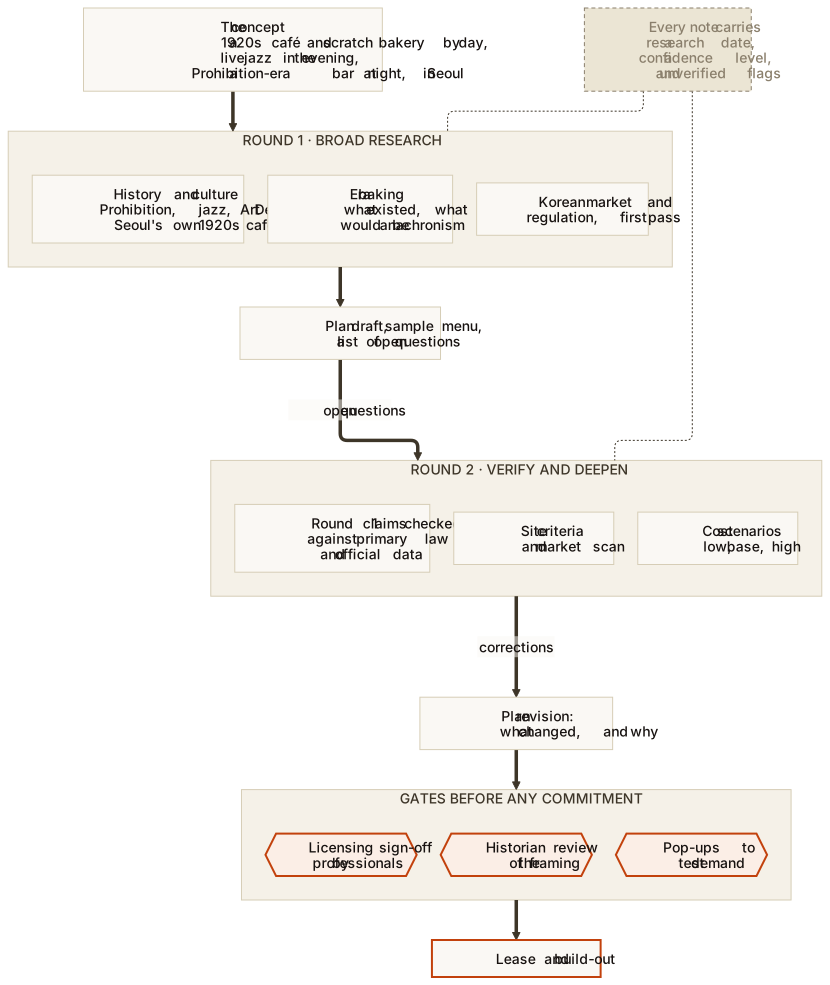
The research runs in rounds, and each round feeds a revision of the plan.
Round 1 covered history and culture, 1920s baking, and a first pass on the Korean market and regulation. It produced the first draft of the plan and a list of open verification tasks.
Round 2 started from those open tasks and the plan’s open questions. It checked round 1’s claims against primary law and official data, set site criteria and scanned the market, and modelled costs as low, base and high scenarios. It corrected round 1 in places: the regulatory brief was revised, and the plan’s second revision lists six changes.
Every note carries a research-as-of date and a confidence level, and marks anything not yet checked against a primary source as [Unverified] or [Flag]. None of it is legal advice, and the notes say so.
No lease is signed until these gates clear:
- Licensing sign-off by professionals. Sign-off from Korean licensed professionals, including an administrative scrivener (행정사) and a tax accountant (세무사), and from the district hygiene office.
- Historian review. A historian reads the Gyeongseong framing before any public test.
- Pop-ups to test demand. Demand is tested in pop-ups before a lease, and the lease comes with a written legal opinion.
Where it stands
As of the latest notes, dated 2026-09-23:
- The business plan is a draft on its second revision.
- The cost model is a first pass, rated low-to-medium confidence and built on labelled assumptions that still need real quotes.
- Site work is criteria and a market scan so far, with no broker quotes or site visits.
- The licensing verification pass closed some of round 1’s open tasks; others are still open.
What’s next
The next gates are the licensing consultations and the historian review. The historian review has to come before any pop-up, because a pop-up is a public test. A lease comes only after pop-ups have shown there is demand.